
2026-06-16 - 8 min read
Vaccinations: Does My Pet Really Need Them? (Part 1)
Few topics in veterinary health generate as much debate as vaccination. In Part 1 of this series, we explore why the controversy exists, what the science actually says, and how veterinarians think about risk.
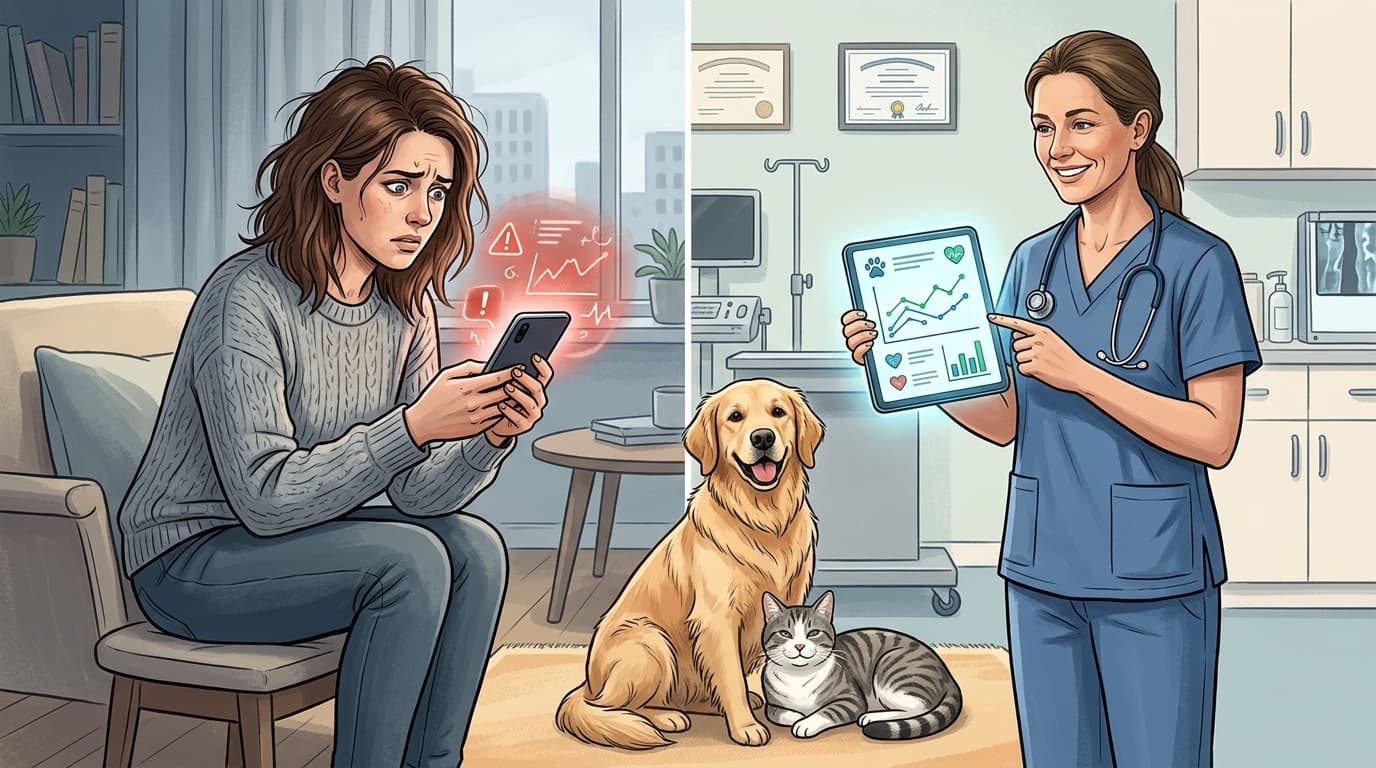
Vaccination—should we do it or not? Few topics in human and animal health generate as much debate. Vaccines sit at the intersection of science, emotion, trust, ethics, politics, economics, and personal experience. As a result, the controversy is often less about immunology and more about how people perceive risk.
The scientific reality is that vaccination is one of the most successful public health interventions in history. Human vaccines have dramatically reduced diseases such as smallpox, polio, measles, and diphtheria. Veterinary vaccines have greatly reduced canine parvovirus, distemper, feline panleukopaenia, and rabies. In South Africa, recent discussions around foot-and-mouth disease have reminded us that animal diseases affect far more than the individual animal — they influence animal welfare, food security, farming, trade, and the economy. From an evidence-based perspective, the benefits of vaccination far outweigh the risks for most people and animals.
Ironically, vaccines have become victims of their own success. When diseases become uncommon, people stop fearing the disease and begin fearing the vaccine. Many younger generations have never seen multiple puppies die from parvovirus, a rabid animal, a kitten dying from panleukopaenia, or a child confined to an iron lung because of polio. These diseases have not disappeared completely — people and animals still suffer and die from them. We simply encounter them less often, so they fade from public awareness.
Human beings naturally pay more attention to harm than prevention. If 10,000 vaccinated animals remain healthy, nobody notices. But if one animal experiences a vaccine reaction, that story spreads rapidly. Healthy outcomes are invisible; adverse events are memorable. Social media amplifies this effect — a video of a suspected vaccine reaction can reach millions of people within hours, while millions of healthy vaccinated pets generate no headlines. Our brains are wired to respond strongly to dramatic stories and perceived danger, often more strongly than to statistics and scientific data.
It is also easy to confuse timing with causation. For example, a dog receives a vaccination and two weeks later develops seizures, an immune-mediated disease, or is diagnosed with cancer. Because the events occur close together, it is natural to assume one caused the other. Occasionally there may be a connection, but more often it is simply coincidence. Determining whether a vaccine truly caused a problem requires careful investigation and large-scale scientific studies.
Vaccines are medical products, and like all medical interventions, they carry some risk. Possible side effects include mild swelling at the injection site, fever, and lethargy. Allergic reactions can occur, and rarely, anaphylaxis. In cats, vaccine-associated sarcomas are uncommon but recognised complications. Immune-mediated and hypersensitivity reactions can also occur. Good science does not deny risk — it acknowledges risk, studies it carefully, and works to minimise it. The important question is not whether vaccines carry risk, but whether the risk of vaccination is greater than the risk of the disease itself.
One of the most common concerns among pet owners today is over-vaccination. Historically, many pets were vaccinated annually regardless of their individual risk factors. We now know that immunity from certain core vaccines often lasts much longer than originally believed. Modern vaccination protocols therefore focus on individual risk assessment, distinguishing between core and non-core vaccines, and using evidence-based booster intervals. As our knowledge grows, recommendations continue to evolve.
Owners often ask why indoor pets need vaccination. The answer is not always straightforward. Indoor pets may still escape unexpectedly, encounter visiting animals, stay at boarding facilities, visit veterinary clinics, experience future lifestyle changes, or be exposed indirectly through people, wildlife, or contaminated environments. Vaccination recommendations should always be tailored to the individual pet's lifestyle and level of risk. Some owners also believe that natural infection is preferable to vaccination — but the difficulty is that natural immunity comes at a cost. To gain immunity against diseases such as parvovirus, distemper, rabies, or measles, the individual must first survive the disease, and many do not.
Vaccination involves balancing individual choice with community protection. Pet owners understandably want control over decisions affecting their animals. At the same time, vaccination helps protect vulnerable members of the population, including newborns, elderly individuals, and those with weakened immune systems. These debates are usually driven by concern rather than ignorance — pet owners fear harming their animals just as parents fear harming their children. The challenge is that fear evaluates risk emotionally, while medicine evaluates risk scientifically and statistically. The two perspectives do not always reach the same conclusion.
No veterinarian should claim that any vaccine is completely risk-free. No medical intervention is. However, the diseases vaccines prevent are generally far more dangerous than the vaccines themselves. The goal is not to vaccinate blindly — it is to vaccinate appropriately, using evidence-based recommendations tailored to each individual patient. As companion animal veterinarians in South Africa, we regularly see diseases that many members of the public never encounter: puppies dying from parvovirus, dogs suffering from distemper, suspected rabies cases, and kittens with panleukopaenia. Witnessing these diseases firsthand inevitably shapes our perspective.
Veterinarians recommend vaccination for one simple reason: it saves lives. Vaccination protects individual animals while also contributing to herd immunity, disease control, and community protection. Our recommendations are not driven by profit, but by a desire to prevent suffering and death. In Part 2, we will discuss the vaccines commonly used in South Africa, what diseases they protect against, whether boosters are still necessary, and recommended vaccination schedules for puppies and kittens.