
2026-06-16 - 8 min read
Vaccinations: Does My Pet Really Need Them? (Part 3)
In this final part of our vaccination series, we address vaccine reactions, debunk common myths, explain titer testing, and show how veterinarians weigh risks and benefits for each individual patient.
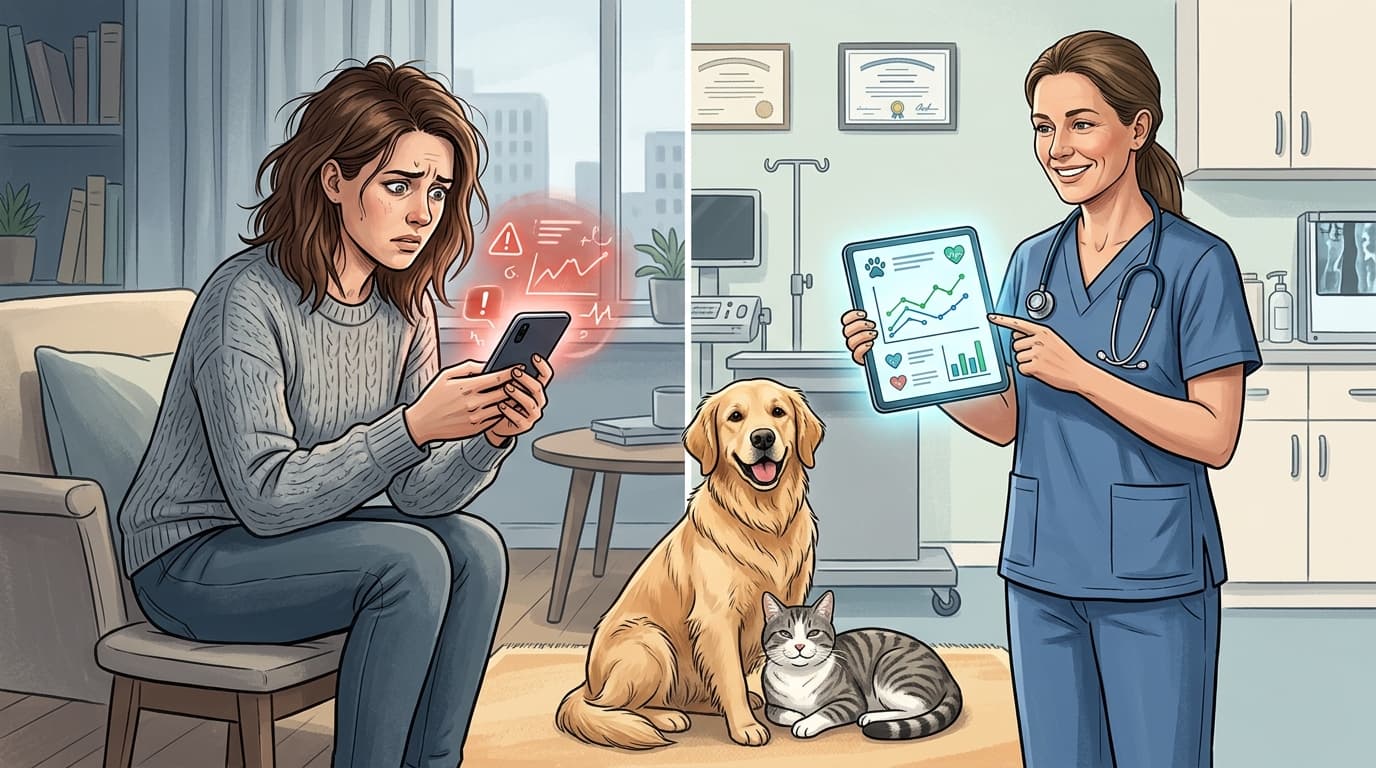
In Parts 1 and 2, we explored why vaccination remains a controversial topic, the diseases vaccines help prevent, and how modern vaccination protocols have evolved. In this final article, we address some of the most common concerns pet owners have about vaccination and explain how veterinarians carefully balance the benefits and risks for each individual patient.
No medical intervention is entirely risk-free, and vaccines are no exception. Fortunately, vaccine reactions are uncommon, and when they do occur, they are usually mild and short-lived. The most common reactions are mild: some pets experience mild lethargy, reduced appetite, a slight fever, or tenderness and temporary swelling at the injection site. These signs typically resolve within 24 to 48 hours without treatment.
Occasionally, pets develop moderate reactions such as facial swelling, hives (urticaria), itching, vomiting, or diarrhoea. These generally occur within minutes to several hours after vaccination and usually respond well to prompt veterinary treatment. The most serious reaction is anaphylaxis — a severe allergic response that may cause collapse, difficulty breathing, severe vomiting and diarrhoea, pale gums, and shock. Although anaphylaxis is a genuine medical emergency, it is fortunately very rare.
One of the most discussed vaccine complications is the development of vaccine-associated sarcomas in cats. These aggressive tumours are recognised but extremely uncommon. Current evidence suggests that chronic inflammation at an injection site may contribute to their development in susceptible individuals. Their rarity should not be ignored, but neither should it be exaggerated. For the vast majority of cats, the risk posed by serious infectious diseases remains far greater than the risk of developing a vaccine-associated sarcoma.
Vaccines are among the most extensively studied medical interventions in history, yet misinformation continues to circulate widely. This is not because pet owners are uninformed or careless — most owners simply want to make the best possible decisions for their animals. The challenge is that misinformation often spreads much faster than scientific evidence. The claim that vaccines cause autism originated from a human medicine study published in 1998 that was later discredited and formally withdrawn. Numerous large-scale studies have since found no evidence linking vaccines to autism, and there is no veterinary equivalent of this condition caused by vaccination.
Another common myth is that vaccines overwhelm the immune system. A healthy immune system encounters thousands of foreign substances every day through food, breathing, grooming, play, and environmental exposure. Compared with these daily challenges, the number of antigens contained in modern vaccines is very small — in fact, many modern vaccines contain fewer antigens than older vaccines while providing improved protection. Similarly, the belief that "my pet never leaves the house" provides complete protection is misleading. Indoor pets generally face a lower risk of exposure, but lower risk does not mean zero risk. Pets escape, visitors enter homes, wildlife enters properties, and life circumstances change. Many indoor cats unexpectedly become outdoor cats after a move, an accident, or an escape.
The claim that natural immunity is better than vaccination is partly true — natural infection often produces strong immunity. The problem is the price that must be paid to obtain it. To develop immunity naturally against diseases such as canine parvovirus, canine distemper, feline panleukopaenia, or rabies, the animal must first survive the disease. Many do not. Vaccination aims to provide protection without requiring the animal to suffer the disease itself.
A vaccine titer test measures the level of antibodies against a specific disease in the bloodstream — in simple terms, it helps answer the question: "Does this animal still appear to have protective immunity?" Titer testing may be considered in pets with a history of vaccine reactions, in elderly animals, in animals with certain chronic illnesses, when owners wish to avoid unnecessary boosters, in some breeding animals, or when proof of immunity is required. Titers are valuable tools, but they are not perfect. A positive titer generally correlates well with protection against diseases such as canine parvovirus, canine distemper, canine adenovirus, and feline panleukopaenia. However, immunity involves more than antibodies alone — memory cells and cellular immunity also contribute significantly and are not routinely measured. A low titer does not automatically mean an animal is unprotected, and a high titer does not guarantee complete protection. Titer results should always be interpreted by a veterinarian within the context of the individual patient.
Veterinarians do not vaccinate every animal that walks through the door. In some situations, postponing vaccination is the safest course of action — for example, in cases of severe illness, high fever, significant immune suppression, certain chemotherapy protocols, severe previous vaccine reactions, or some autoimmune diseases. In these circumstances, the veterinarian carefully weighs the risk of vaccination against the risk of remaining unprotected.
Modern vaccination is no longer simply a matter of following a standard schedule. Every patient presents a unique combination of factors that influence recommendations, including age, lifestyle (indoor or outdoor, social or isolated, frequently boarded or travelled with), local disease risk, overall health status, and previous vaccination history. Consider two dogs: an eight-week-old puppy that frequently visits parks and lives in an area where parvovirus is common — in this case, the benefits of vaccination overwhelmingly outweigh the risks. Compare that with a fourteen-year-old indoor dog suffering from severe autoimmune disease, who has experienced a previous vaccine reaction and maintains stable protective antibody titers. In that situation, the risk-benefit calculation becomes more complex and may lead to a different recommendation. Neither approach is "pro-vaccine" or "anti-vaccine" — both represent evidence-based medicine tailored to the individual patient.
Veterinarians do not recommend vaccines because vaccines are perfect. They recommend vaccines because the diseases they prevent are often far more dangerous than the vaccines themselves. The goal is not to vaccinate every animal as frequently as possible, nor to avoid vaccination at all costs. The goal is to find the safest and most effective balance for each individual patient — and good medicine exists within that balance. Vaccination discussions often become emotional because they involve something deeply important: the health of a beloved family member. Questions are healthy. Scepticism is healthy. What matters is that decisions are based on reliable evidence rather than fear alone. For most pets, vaccination remains one of the safest, most effective, and most compassionate medical interventions available.